2021 Wildlife Photography Winner

35 Awards · Top 35 USA
November 2021
Wildlife Photography

2021 Wildlife Photography Winner

For the second consecutive year, recognized among the Top 35 Wildlife Photographers in the United States by 35AWARDS.

November 2021 Grand Teton NP, Wyoming Packy Savvenas
3 min read

The night was fading when he stepped out of the willows.

For the second year in a row, I was honored to be selected as one of the Top 35 Wildlife Photographers in the United States. This time I placed 7th out of 35 in the 2021 awards.

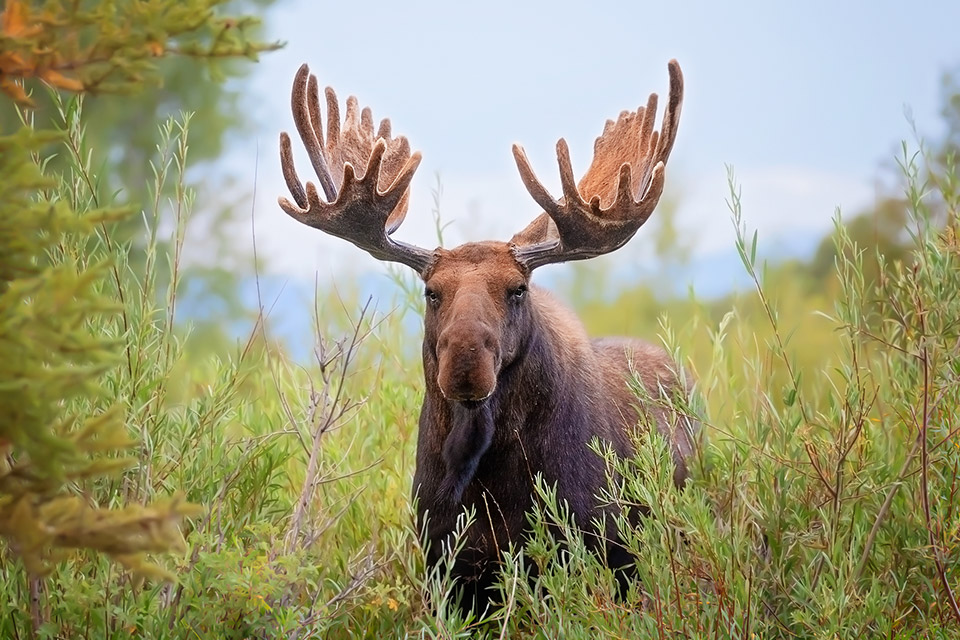
The photograph that earned this recognition was taken in summer, before the rut, in Grand Teton National Park. A bull moose in full velvet, wide and heavy, moving through the willows in that thin edge of light between darkness and day. The kind of moment that looks quick when you see the finished frame, but asks everything from you before it ever happens. Pre-dawn mornings. Hours of waiting. The kind of cold and stillness that gets deep into your bones.

I have been photographing wildlife in the Greater Yellowstone Ecosystem for over a decade, and every season teaches you something new. About the animals. About the land. About yourself. Summer moose have a different feel to them. They are quieter. Heavier. Still building. Still feeding. Still carrying that calm strength before the valley sharpens and the rut changes everything.

There is something about those mornings that feels bigger than a photograph. You drive out in the dark, not knowing if anything will happen. The Tetons are just shapes. The willows hold their secrets. Then, every now and then, the land decides to give you something.

That morning, it gave me him.

The light lasted maybe four minutes. That is the deal you make with this place. You show up again and again, and most mornings nothing aligns. Then one morning the bull steps into the right pocket of fading night, the willows open, the light catches the velvet just enough, and the whole season suddenly makes sense.

Packy Savvenas, Field Notes, 2021

The 35 Awards program recognizes the top wildlife and nature photographers working in the United States. Being named to this list for the second year in a row, and moving up in the rankings, means more to me than any single image. To me it reflects the work behind the frame. The repetition. The patience. The commitment to doing this the right way.

Wildlife photography is not luck. It is preparation, knowledge of animal behavior, and respect for the animals and the land. You do not chase the shot. You earn it. You learn the patterns. You study the terrain. You put in the hours. And when the moment finally comes, you are ready enough to receive it.

This recognition is for every photographer who gets up before the sun, drives into the dark, and waits without knowing if that day will be the day.

Usually it is not.

But sometimes it is.

And that is everything.

Photo Details

Subject

Bull Moose

Alces alces shirasi

Location

Grand Teton NP

Wyoming, USA

Season

Pre-Rut

September 2021

Light

Golden Hour

Sunset ambient

Recognition
2021

7th Year — Top 35 USA

35 Awards · Top 35 USA Photographers

2021

Horned Animals Winner

Wildlife Photography Division

2020

6th Year — Top 35 USA

35 Awards (consecutive recognition)

Packy Savvenas portrait

Packy Savvenas

Greek Mountain Man

Award-winning wildlife photographer based in the Greater Yellowstone Ecosystem. 2× Top 35 USA.

Full Bio

Horned Animals Wildlife Photography Winner

Packy Savvenas - Photography Award - Best Horned Animals
35 Awards · Horned Animals
October 2021
Wildlife Photography

Horned Animals Wildlife Photography Winner

For the second consecutive year, recognized among the Top 35 Wildlife Photographers in the United States by 35AWARDS.

October 2021 Grand Teton NP, Wyoming Packy Savvenas
3 min read

By the time I reached him, I had already crossed enough cold water to stop feeling my feet.

That is usually how these things go.

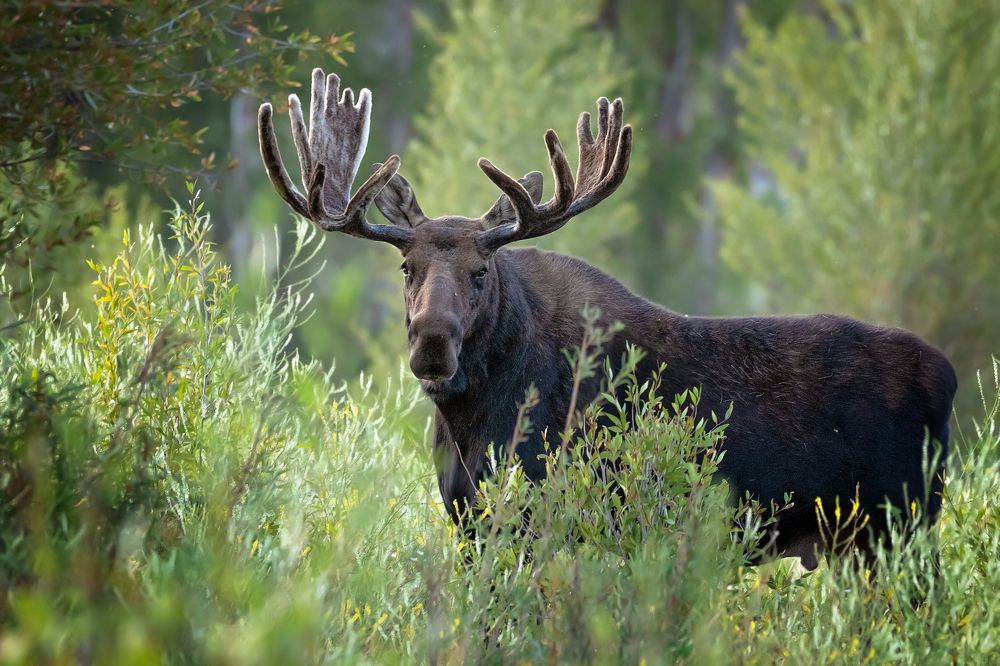
The frame people see at the end looks clean. Effortless, even. A bull moose in full velvet, standing in evening light with the sun striking him from behind, every edge of those antlers lit like they were carrying their own fire.

What the picture does not show is the way in.

The river crossings. The wet ground. The long push through the forest. The places where the trail gives up and you keep going anyway because something in you says he is still farther in. Still ahead. Still worth it.

That evening, I was after moose the way I always am when summer starts leaning toward change. Quietly. Patiently. Looking for one clean moment in a place that almost never gives you one for free.

Then the woods opened just enough.

And there he was.

A bull in beautiful velvet, heavy and calm, moving through the trees like he had all the time in the world. The sunlight was dropping behind him, slipping through the forest at the perfect angle, catching the velvet and setting it on fire. Not bright fire. Soft fire. The kind that lasts a minute if you are lucky and disappears if you move wrong.

I did not need to tell myself to slow down. The animal did that for me.

Everything about a moose like that makes you smaller. The body. The stillness. The sense that you are looking at something ancient and unfinished at the same time. Velvet always does that to me. It makes a bull look powerful, but not yet sharpened. Like he is still becoming what he will be.

I raised the camera and took what the evening gave me.

A few steps. A pause. Light through the paddles. A turn of the head. Then the forest started taking him back.

That was it.

No drama. No second chance. Just one of those moments that feels bigger while it is happening, even before you know what it will become.

Later, I found out that image was selected in the Horned Animals competition through 35AWARDS, one of the largest photography competitions in the world. Three of my images were recognized there, and I will be sharing one from that evening, the one that still feels like it came out of the trees carrying its own weather.

This year, more than 1,610 professional and amateur photographers from 173 countries entered the competition, with over 3,742 photos submitted.

I am grateful for the recognition, of course.

But what stays with me is not the email.

It is the river.
The forest.
The last light.
And that bull, standing there in velvet like the evening had been waiting on him the whole time.

Photo Details

Subject

Bull Moose

Alces alces shirasi

Location

Grand Teton NP

Wyoming, USA

Season

Pre-Rut

September 2021

Light

Golden Hour

Sunset ambient

Recognition
2021

7th Year — Top 35 USA

35 Awards · Top 35 USA Photographers

2021

Horned Animals Winner

Wildlife Photography Division

2020

6th Year — Top 35 USA

35 Awards (consecutive recognition)

Packy Savvenas portrait

Packy Savvenas

Greek Mountain Man

Award-winning wildlife photographer based in the Greater Yellowstone Ecosystem. 2× Top 35 USA.

Full Bio

2020 Wildlife Photography Winner

Get Better Wildlife Photo Today - Greek Mountain Man
35 Awards · Top 35 USA
Novemember 2020
Wildlife Photography

2020 Wildlife Photography Winner

First-year recognition by 35AWARDS, including Top 35 Wildlife Photographers in the United States and selection among the 50 Best Photos of 2020.

Novemember 2020 Grand Teton NP, Wyoming Packy Savvenas
3 min read

I was dressed for the weather. Snow pants. Boots. Layers. The kind of evening where you build yourself like armor before stepping out of the truck. There was one other photographer there. We both knew what was in front of us.

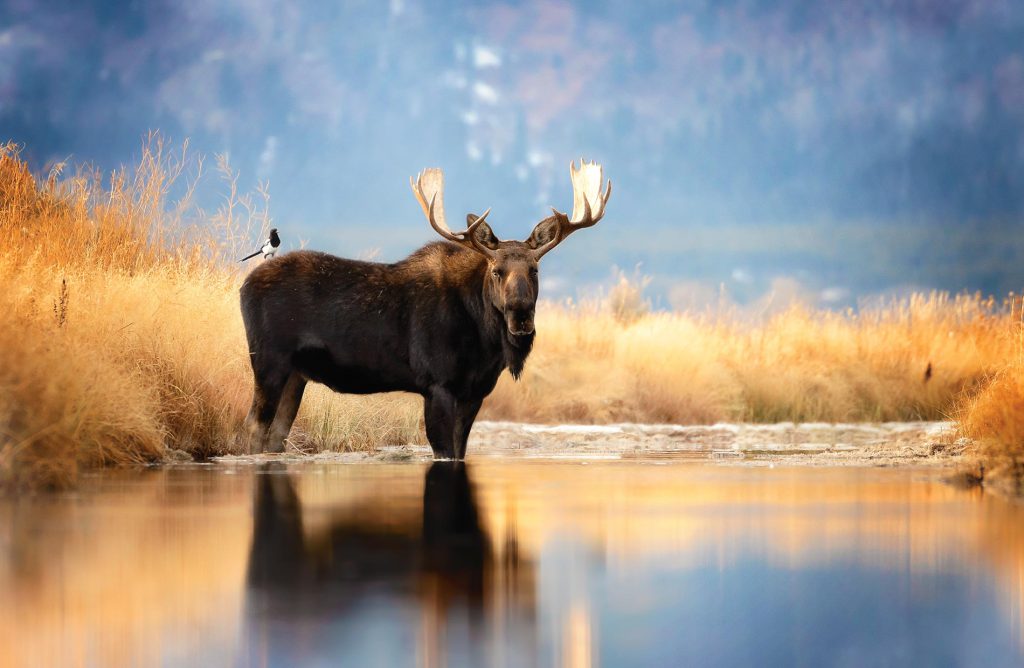
The moose was in the ditch.
The bird was still bothering him.
The Tetons were sitting back there like they had been waiting for this too.

And the angle I wanted was in the water.

So I took off my shoes.

Not because it was smart. Because the picture was there.

I stepped into that ditch knowing it stayed warm year-round, one of those spring-fed cuts that never fully freezes. But warm does not mean comfortable when the air is biting. The water cut through the cold just enough to make it deceptive, and within seconds my feet started going numb anyway. The kind of numb that creeps in slow and then takes over. My body knew it wasn’t right. My mind didn’t care. The bull was still there. The light was still holding. So I stayed in it and snapped as many pictures as I could.

That is the part people do not see when they look at a finished wildlife photograph. They see the animal. They see the mountains. They see the mist and the mood and the clean frame. They do not see boots left on the bank. They do not feel the sting in your feet. They do not hear your brain telling you to get out while the rest of you says, not yet.

That evening gave me one of the most important images of my life.

It also gave me my first award ever.

I recently received word from 35AWARDS, one of the largest photography competitions in the world, and I am still trying to let it sink in. One of my images was selected as one of the 100 Best Photos of 2020. I was also recognized among the Top 35 Photographers in the United States across all categories, not just wildlife, along with a Top 50 Wildlife Nomination. On top of that, one of my images was selected to be part of the annual Catalogue.

Seeing my name there felt unreal.

What makes it even harder to believe is the size of the competition. That year, more than 123,000 professional and amateur photographers from 173 countries entered the annual 35AWARDS competition and submitted a total of 444,000 photographs. The work went through three rounds of judging, drew 119 million votes, and in the end 50 professional photographers from 50 different countries selected the winners from the photographs that rose to the top.

And somehow, one of mine was in that conversation.

That means a lot to me.

Not because awards are the reason I go out. They are not. I go out because the land keeps calling. Because the animals keep teaching. Because there is something about standing in the fading light, waiting for a shape to lift out of the willows, that still feels bigger than photography.

But this one matters.

It matters because it was the first.
It matters because it came from a real evening, a hard evening, not from luck or convenience.
It matters because that image carries the exact thing I have been trying to say with this work all along.

Show up.
Pay attention.
Respect the animal.
Do what the moment asks of you.
And when the land gives you four good minutes, be ready.

That bull moose gave me that.

He stood there in that warm ribbon of water while a bird needled him and the light held just long enough. I stepped into the ditch, made the frame, and came out shaking. At the time, I only knew it felt like one of those evenings that stays with you. I did not know it would become my first real recognition on that scale.

Maybe that is part of why it means so much.

You do the work not knowing where any of it will lead. Most evenings give you nothing. Some give you a decent frame. Once in a while, if you are lucky and stubborn enough to keep going, an evening gives you something that changes the course a little.

This one did.

I am grateful to 35AWARDS for the recognition. I am grateful that one of my images will live in the annual Catalogue. And I am grateful for every freezing evening, every missed shot, every empty drive, and every lesson that led up to that bull standing in that ditch.

That is the photograph people see.

What I see is the whole evening behind it.

And that is the part I will never forget.

Photo Details

Subject

Bull Moose

Alces alces shirasi

Location

Grand Teton NP

Wyoming, USA

Season

Post-Rut

September 2021

Light

Golden Hour

Sunset ambient

Recognition
2021

7th Year — Top 35 USA

35 Awards · Top 35 USA Photographers

2021

Horned Animals Winner

Wildlife Photography Division

2020

6th Year — Top 35 USA

35 Awards (consecutive recognition)

Packy Savvenas portrait

Packy Savvenas

Greek Mountain Man

Award-winning wildlife photographer based in the Greater Yellowstone Ecosystem. 2× Top 35 USA.

Full Bio

Wildlife Photography Cheat Sheet

Capture Wildlife at Its Best: ISO, Aperture, and Shutter Speed – Wildlife Photography Cheat Sheet Giveaway

Are you tired of missing the perfect shot of that stunning bird or majestic animal? Do you want to take your wildlife photography to the next level? Then it’s time to master the trio: ISO, aperture, and shutter speed. These three settings are the key to capturing stunning images of wildlife with the right exposure and creative control.

But with so many technical terms and settings, it can be overwhelming to know where to start. That’s why we’ve put together a comprehensive wildlife photography cheat sheet that will make understanding ISO, aperture, and shutter speed a breeze.

Here’s a sneak peek of what you’ll find in this cheat sheet:

ISO:

  • What it is: ISO measures the sensitivity of your camera’s sensor to light.
  • Best practices for wildlife photography: Keep ISO as low as possible to reduce noise (graininess) in your images, especially when shooting in low light conditions.
  • How to adjust:
    1. Locate the ISO setting on your camera. It may be in the menu or accessible through a physical button or dial.
    2. Adjust ISO in increments, such as 100, 200, 400, 800, and so on.
    3. Start at the lowest ISO value and increase as needed.
    4. Take test shots and review them to see how the change in ISO affects the exposure.
    5. Repeat this process until you achieve the desired exposure.

Aperture:

  • What it is: Aperture refers to the size of the opening in the lens that lets light into the camera.
  • Best practices for wildlife photography: Use a wide aperture (low f-number) to isolate your subject from the background, which can help reduce distractions and make your subject stand out.
  • How to adjust:
    1. Locate the aperture setting on your camera. It may be in the menu or accessible through a physical button or dial.
    2. Adjust aperture by changing the f-number, such as f/1.8, f/2.8, f/4, and so on.
    3. Take test shots and review them to see how the change in aperture affects the depth of field.
    4. Repeat this process until you achieve the desired depth of field.

Shutter Speed:

  • What it is: Shutter speed refers to the amount of time that the shutter remains open to allow light into the camera.
  • Best practices for wildlife photography: Use a fast shutter speed to freeze action, especially when shooting moving wildlife, and a slower shutter speed to capture motion blur for creative effect.
  • How to adjust:
    1. Locate the shutter speed setting on your camera. It may be in the menu or accessible through a physical button or dial.
    2. Adjust shutter speed in fractions of a second, such as 1/60, 1/125, 1/250, and so on.
    3. Take test shots and review them to see how the change in shutter speed affects motion.
    4. Repeat this process until you achieve the desired motion effect.

With this cheat sheet in hand, you’ll be able to take control of your camera and capture stunning wildlife photos with ease. Don’t miss out on this opportunity to improve your photography skills and take your wildlife photography to the next level. Download your free wildlife photography cheat sheet today and start capturing wildlife at its best!

And here’s a visual representation of the information, to help you better understand the concepts: